
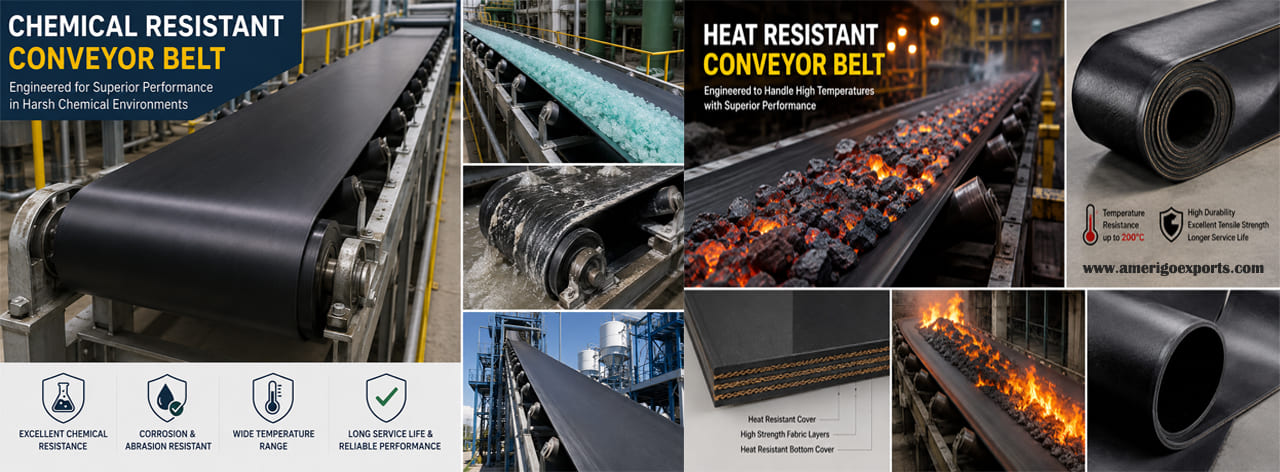
Conveyor belts are widely used across industries for the continuous, efficient, and safe transportation of raw materials, components, bulk materials, and finished products. They help reduce manual handling, improve productivity, and streamline material-handling operations.
Used for transporting coal, iron ore, limestone, bauxite, copper, and other minerals.
Used for handling limestone, clinker, gypsum, cement bags, and other raw materials.
Used for coal handling, ash handling, fuel transportation, and material transfer.
Used for transporting iron ore, pellets, coke, sinter, scrap, and steel products.
Used for conveying sand, gravel, crushed stone, rocks, and other aggregates.
Used for transporting sand, concrete, bricks, aggregates, and construction materials.
Used for transporting fruits, vegetables, grains, packaged foods, bottles, and containers.
Used for handling wheat, rice, maize, seeds, grains, fertilizers, and agricultural products.
Used for conveying urea, DAP, NPK, potash, and other fertilizer materials.
Used for transporting chemicals, powders, granules, and industrial raw materials.
Used for moving bottles, cartons, containers, packaging, and production-line materials.
Used for transporting automotive components, tyres, engines, parts, and finished vehicles.
Used for handling parcels, cartons, boxes, packages, pallets, and warehouse materials.
Used for package sorting, order processing, distribution, and automated material handling.
Used for handling bulk cargo such as coal, grains, minerals, and other materials.
Used for transporting passenger baggage, parcels, and air cargo efficiently.
Used for handling fabric rolls, garments, textile components, and finished products.
Used for transporting wood chips, pulp, paper rolls, and finished paper products.
Used for sorting and transporting plastic, glass, metal, municipal waste, and scrap.
Used for transporting clay, tiles, ceramic products, and production materials.
Used for handling sand, cullet, glass containers, and finished glass products.
Used for transporting sugarcane, bagasse, sugar, and other production materials.
Used for transporting logs, wood chips, sawdust, timber, and wood products.
Used for handling foundry sand, castings, scrap metal, moulding materials, and components.
Used for transporting clay, bricks, concrete blocks, and finished building products.
Different industries require conveyor belts with specific properties. Depending on the application, conveyor belts can be manufactured with resistance to heat, oil, fire, chemicals, abrasion, cold temperatures, and food-contact requirements.
Common types include General Purpose Conveyor Belts, Heavy Duty Conveyor Belts, Heat Resistant Conveyor Belts, Oil Resistant Conveyor Belts, Fire Resistant Conveyor Belts, Chemical Resistant Conveyor Belts, Cold Resistant Conveyor Belts, Food Grade Conveyor Belts, and Chevron Conveyor Belts.